Feeds:
Posts
Comments

Archive for the ‘Rhetoric’ Category

Informal Logic vol. 31 no. 2

Volume 31, number 2 of Informal Logic is now available for your reading pleasure.  Particularly recommended in this issue is Geoff Goddu’s 2010 AILACT Essay Prize-winning article on the process/product ambiguity.  I had the good fortune to see this work in an earlier phase at ISSA last summer and I’m very happy to see it in print here.  It’s a valuable article not only for it’s methodological challenge to what is for many in the study of argumentation a foundational notion, but because it spurs us to think more carefully about the metaphysics of argument in general.  The paper and its author well deserve the recognition of the AILACT prize.

Read Full Post »

I’m pleased to announce here on RAIL that the journal Cogency has allowed open access to it’s first four issues. I’m not sure if they plan to continue this policy, as, for instance, Informal Logic does, but for now it’s a great opportunity to check out what is already a diverse and interesting array of articles by many of the leading scholars in our field. (How they let an article of mine slip into the mix is anyone’s guess!)

Do check it out!

Read Full Post »

Note: This is a re-posting to remind readers that the CFP deadline is fast approaching!

This Call for Papers is for the first issue of the Electronic Journal of Integrated Studies in Discourse and Argumentation

From the EID&A home page:

Linked to the Department of Arts and Literature of Universidade Estadual de Santa Cruz, the Journal EID&A – Electronic Journal of Integrated Studies in Discourse and Argumentation – arises from a mission to contribute to the dissemination of studies located in the interface between Discourse Analysis and Argumentation. Thus, papers submitted to this Scientific Committee should be taken on the perspective of studies that comprise the argumentation in the process of constructing meaning in discourse and in the utterance situation. The goal is to promote discussion of theoretical objects or analysis of these discursive practices in society.

Call for Papers

The first issue EID&A will gather papers which focus precisely on the essence, problems and prospects from the interface between Discourse Analysis and Argumentation.

The journal EID&A – Electronic Journal of Integrated Studies in Discourse and Argumentation – invites researchers to contribute with papers focused on the discussion about the nature, problems and prospects of the interface between the Discourse Analysis and the Argumentation.

The Journal EID&A is going to publish papers, translations and reviews. For more details, authors must consult the rules for submissions of papers, available on the website www.uesc.br/revistas/eidea/english.

The deadline for submission of papers will end on July 1st, 2011. The first edition of the EID&A is awaited to September 2011.

Read the original announcement via the Analysis and Discourse wiki here.

Read Full Post »

OSSA 2011 is now officially in the bag.  It was a good week. With such a high volume of papers presented it’s possible to follow many trajectories, but these were my highlights:

The Ambassador Bridge

  • Attending a pre-conference workshop on normative pragmatics with Jean Goodwin and Beth Innocenti. Jean and Beth did a fantastic job explaining their views and those of Fred Kauffeld, with whom I was also fortunate enough to chat with at length. Even having known something of these views before, I left considerably enriched for the experience, and convinced that normative pragmatics is a research program that deserves a lot more investigation and development.
  • Discourse analyst Karen Tracy’s keynote address on reasonable hostility in public hearings was also rich with ideas that I intend to think a lot more about in the coming weeks–especially her conception of how issues move through phases of being unarguable (unreflectively taken as settled), arguable (manifestly unsettled or controversial) and then unarguable again (settled sufficiently for the public discussion to move on).  This is not to say that the other keynotes were not also worthwhile–they were. Paul Thagard’s effort to bring a neuropsychological viewpoint to the discussion over the nature of critical thinking was timely, and David Hitchcock’s presentation of his work on inference claims was as interesting and challenging as those who know his work would expect it to be. (You can read the abstracts of the keynotes here.)
  • Having the chance both to attend Maurice Finocchiaro’s session on deep disagreement and to chat with him about it afterwards was illuminating.  As readers of this blog will know, deep disagreement is one of my areas of interest within argumentation theory. Finocchiaro’s work, which will be part of a forthcoming book on meta-argumentation, moves the discussion of deep disagreement forward in what I think are all the right ways.  I’m very glad he’s taken the problem on in the way that he has.
  • Of course I have to thank the wonderful audience that attended my presentation on the history of conductive argument and reflective equilibrium as well. We had an excellent discussion from which I learned much that I will bear in mind as I carry forward my work on this and other projects.

Finally, no discussion of an OSSA conference would be complete without mention of the enormous camaraderie and good will that animates these events.  Coming away from this iteration of OSSA I am reminded of my initial impression that the argumentation community models what I think are scholarly ideals of diversity of approach, internationality and interdisciplinarity.  Of course, we have our divisions and competitive moments just like any other body of scholars.  This is only natural among diverse people who care deeply about what they study and who struggle to get it right.  What is impressive about argumentation theory is that these divisions enliven the discussions rather than hamper them.  In many ways, these gatherings are as much gatherings of friends as they are academic gatherings. Thus, though I won’t try the reader’s patience with a long list of names, I will close this entry by saying how glad I am to have had the chance to catch up with so many old friends, and to have made so many new ones. All in all, it was a week well spent. I look forward to the next one.

Read Full Post »

Rhetoric and argumentation don’t usually seem like tools of war.  Typically, we think of them as ways of preventing war; of wars as something that happens when rhetoric and
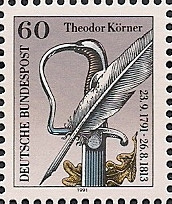
German stamp showing the pen and sword together, via Wikimedia Commons

argumentation (under form of diplomacy) fail.  A recent article changes this picture entirely. “Information Operations”, or “IO”: military operations with the general goal of influencing or compromising the decision making of adversaries or of protecting one’s own decision making from such interference, are now an openly acknowledged part of what the US military (and one would assume, that of many other nations) does. The article, “Military Social Influence in the Global Information Environment: A Civilian Primer” by Sara King, appears in the August 2010 issue of the journal Analyses of Social Issues and Public Policy and gives a strikingly detailed overview of IO. King supports her overview with ample evidence from actual uses of IO in current, and in some cases even ongoing conflicts. The article can be read online here in its entirety (at the time of this writing). Psychologist Vaughan Bell also has an interesting write up about the article on the blog Mind Hacks.

As King notes, it isn’t necessarily news that the military does this. What is news is the degree to which they do it comprehensively, and the degree to which the management of public opinion both abroad and at home is the focus of ongoing military concern.

This, I think, is something which scholars of argument and rhetoric should take very seriously. It raises a number of hard questions. Many will no doubt be horrified by the military’s use of techniques of persuasion across the smallest and largest of scales, but if the desired result is less use of lethal force, then how strenuous should those objections be made?  Similarly, while one might not object to IO aimed at making it harder for terrorists to recruit new members to their causes, it does to some degree compromise the autonomous decision making processes of the individuals involved–and isn’t this the very basis on which we would object to being subject to similar manipulations?  Does the fact that we are “at war” make it alright to do this? If so, why? To what degree?  And what does knowing that these kinds of operations are going on all the time do to our trustworthiness in traditional media outlets and the institution of journalism overall?  These and other questions, I think, are well worth our time. No matter how we answer them, the fact remains that some of the techniques we teach are now, for better or for worse, openly acknowledged weapons of war. It’s worth considering whether or not the ethical approach we take to teaching them needs reevaluation in that light.

Read Full Post »

Anna Elizabeth Dickinson (1842-1932), the first woman to address the US Congress was by all accounts "a gifted orator".

Many in the field of rhetoric, I’ll wager, are happy to see an article about their discipline at all in a major newspaper like the Guardian.  Being a philosopher myself I sympathize with the sort of small-town-ish “Hey! They’re talking about US!!” feeling engendered by articles like Mary Beard’s What makes a great speech?

The article itself, however, is rather a letdown in terms of what it communicates to the reader about rhetoric.

Let me begin in fairness by noting that Mary Beard is a well-known classicist in the UK.  Thus it is not surprising that her treatment of rhetoric here focuses primarily on sources and examples drawn from Greco-Roman antiquity.  Be this as it may, she speaks in a general voice here about rhetoric and so her discussion is disturbingly incomplete. Rather than showing rhetoric as the very active and modern discipline that it is, her focus on the ancients gives the impression that the study of rhetoric ended with Cicero. She makes no mention at all of any figures in the history of rhetoric between antiquity and the present day. Not even foundational figures of contemporary rhetoric like Perelman and Olbrechts-Tyteca, get a mention, to say nothing of figures lesser known outside rhetoric but equally if not more important within it like Burke, Richards, Toulmin, or Henry Johnstone Jr..  Though to her credit she avoids rehashing the standard Platonist objections to rhetoric, Beard’s presentation is rendered somewhat shallow by her lack of modern sources.  (more…)

Read Full Post »

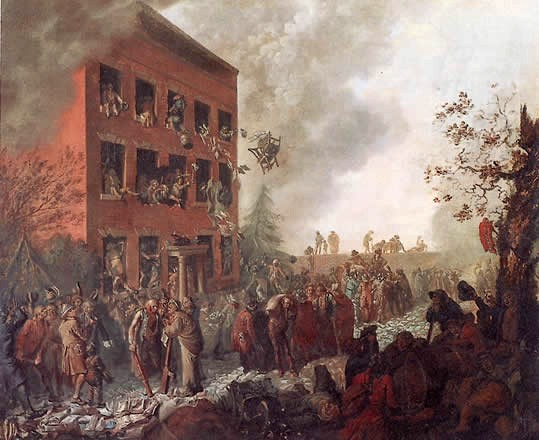
Rioters burned Priestley's home not for what he did, but for what he said about revolution.

Extremists are never bored.

Tom Junod’s remarkable piece on Fox News mogul Roger Ailes in Esquire magazine is well worth your time anyway, but for rhetoricians and students of political argument it’s pure gold–a look inside the head of the man who is largely responsible for the shape of American political discourse. It’s a long article but it pays back the effort with chestnuts like these:

What Roger Ailes has done at Fox is find a way to mainstream extremity for fun and, of course, for profit. He’s found out that people need the validating experience of extremity in the same way that he does. And he takes extreme positions and says extreme things because he needs to, because they allow him to make the choice that’s at the heart of his power.

If nothing else, Junod should be given an award of some kind for coming with a phrase that encapsulates so much about where American political discourse (and increasingly global political discourse) is today.  The “validating experience of extremity”– a notion big enough to capture both the vague anger of everyday people struggling to make the mortgage payment and the kind of madness that drove Jared Lee Loughner– is a phenomenon we should all be watching very closely.  There is perhaps no single, more important fact about the current political environment than that it is driven by this experience.

Read Full Post »


Now, here’s the thing.  I like Michael Sandel. I really do. (I even met him once, though I really, really doubt he would remember.) He’s done a lot to advance the cause of political communitarianism–a position that I respect immensely though I do not share it–and I generally regard him as a decent political philosopher.

Perhaps that’s why I have such a hard time sharing his optimism that the world’s democratic processes can be positively reformed if we simply replicate the Socratic teaching model he uses with a roomful of highly intelligent professionals in this TED session (or his classes at Harvard) with audiences throughout the world. It’s an idea that doesn’t live up to the rest of Sandel’s body of work.

That said, it’s not as though he doesn’t have a point. In a sense he’s right. We (in the US) generally have lost the art of public debate.  In my view that’s got a lot to do with our media culture, the state of our educational institutions, our particular political landscape at this point in history, and a host of other factors. I’m just not sure that the cure for what ails us is a re-instating of Aristotelian etiological vocabulary. Don’t get me wrong–I love Aristotle’s ideas too; rather more than Sandel’s in fact– but there’s something a bit too easy about Sandel’s approach to political deliberation here. The missing elements of this talk (and here I find myself thinking back to Jim Freeman’s ISSA keynote from last summer) only remind me, yet again, of how much “mainstream” moral and political philosophy could gain through an acquaintance with argumentation theory.

But maybe that’s just me. Perhaps I’m missing something in this talk, or I simply need a hug today or something.

Read Full Post »

An interesting distinction is made by Andrew Cline in this recent post on his rhetoric and journalism blog, Rhetorica, between “punditry” and “opinion journalism”.

According to Cline, opinion journalism is reporting informed by or explicitly written from a particular political perspective.  It includes acting as a “custodian of fact” and observing a “discipline of verification”.  The offers this description of that discipline via a link to an older post:

A discipline of verification should be basic to any practice that we would understand as journalism. Practicing such a discipline means that journalists must be custodians of fact, i.e. journalists should get to the bottom of civic disputes by gathering and verifying facts rather than simply allowing interested sources to spout off. Journalists should protect the facts from those who would spin them, ignore them, or distort them. When journalists don’t practice this discipline, they are guilty of spinning, ignoring, and distorting, often in the name of fairness and balance.

As to being a custodian of fact, Cline has this to say in another older post on Rhetorica:

What I’m getting at here is this: facts are not necessarily easy things to nail down unless we’re measuring (and even then we can run into problems). […] There can be no argument over facts in themselves. We argue about how facts are measured and what facts mean. And we argue about assertions of fact until such assertions are established as fact. Reporters should consider the statements by sources as assertions of fact until such time as the reporter can establish them as facts. The news organization, then, should not publish unverified assertions without disclaimers or qualifiers.

In contrast to opinion journalism, according to Cline, punditry is simply about “winning politically” and does not include the imperatives to be a custodian of fact or to follow a discipline of verification.

(more…)

Read Full Post »

Cognitive dissonance is one of the best established notions in psychology.  Simply put (perhaps too simply) the idea is that people in general will go to almost any length to hold onto a cherished belief, no matter how strong the evidence against it is, and no matter how irrational the attempt to do so may seem (or actually be).   In a recent posting on his blog Ben Goldacre talks about a recent article in the Journal of Applied Social Psychology that focuses on this effect in cases where subjects dismiss well-founded scientific data that contradicts their beliefs.

While reading this discussion I kept returning in memory to a session I attended at ISSA a couple of weeks ago on deep disagreement. Two of the papers presented focused extensively on strategies for resolving deep disagreements.   David Zarefsky presented a battery of strategies none of which, interestingly, involved a direct attack on the belief(s) at the heart of the disagreement.  Manfred Kraus’s proposal was that deep disagreement be dealt with by “anti-logical” reasoning after the fashion of the Sophist, Protagoras.   I’m no expert on the Sophists but as I understood the paper Kraus seemed to be suggesting that in anti-logical reasoning it’s not so much the partisans of the contradictory views that work out their disagreement as it is the audience to the dispute, who act in the role of judge.

(more…)

Read Full Post »

« Newer Posts - Older Posts »